Porcelain Veneers in Toronto
At Toronto Smile Gallery in Yorkville, veneers aren’t a side service. They’re the heart of what we do. If you’re looking for a cosmetic dentist in Yorkville, Dr. Andrew Charkiw and Dr. Armaghan Afsar are general practitioners who provide customized cosmetic dental treatments, including porcelain veneers. Between them, they have placed more than 5,000 porcelain veneers, and we fabricate them right here in our own in-house lab, which is a big part of why our results look natural rather than uniform and fake.
Veneers Toronto
If you find yourself hiding your teeth in photos, talking with your hand half-covering your mouth, or feeling a little deflated every time you catch your reflection, you’re far from alone. The teeth we’re born with don’t always cooperate. They chip. They stain in ways no whitening can fix. They wear down, drift out of line, or leave gaps that bonding never quite settled. And after a while, that one thing you don’t love about your smile starts shaping how freely you show it.
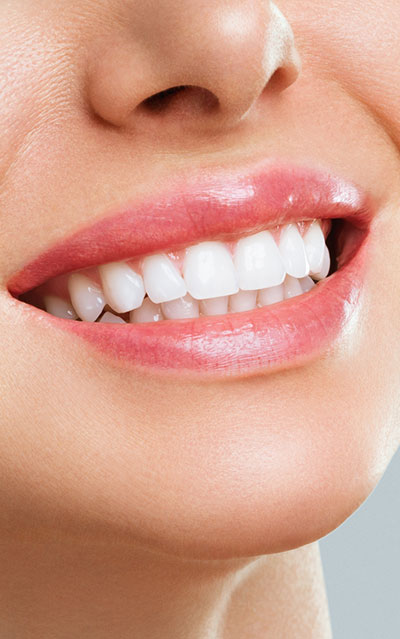
Porcelain veneers exist for exactly that feeling. They’re one of the most transformative options in modern cosmetic dentistry in Toronto — and when they’re done thoughtfully, they don’t look “done” at all. They just look like a really good version of your own teeth.
Why Us ?
- IN HOUSE DENTAL LAB
FOR RESTORATIONS - PROVEN RESULTS IN
SMILE GALLERY
- OVER 5000 PORCELAIN
VENEERS PLACED - CUSTOM SMILE DESIGN BY
PROFESSIONALS
More Than 5,000 Veneers, One Smile at a Time


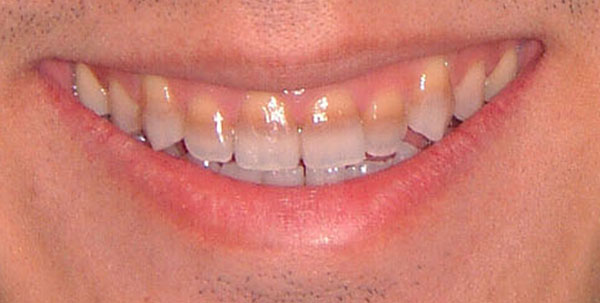
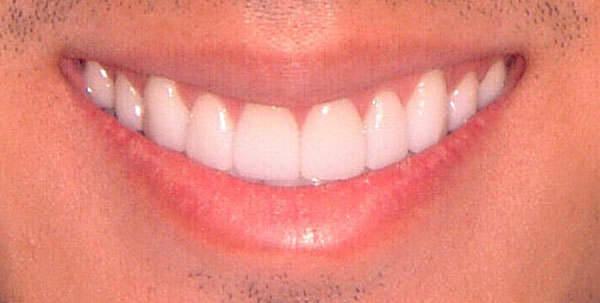
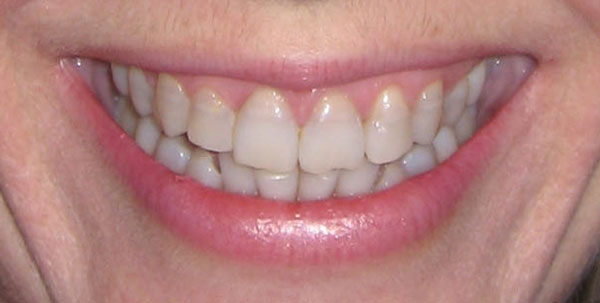

Why Patients Choose Porcelain Veneers in Toronto
People rarely come in asking for “veneers” by name. They come in with a story. Once we start talking, the same handful of reasons tend to surface again and again:
Stains that won't budge
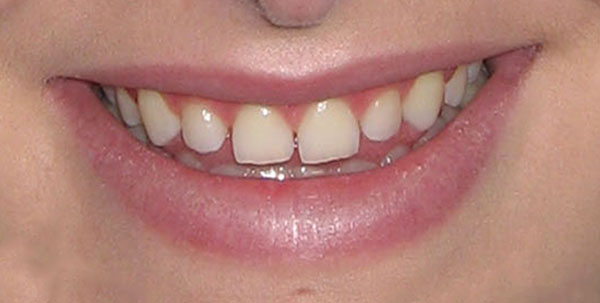
Surface discolouration often responds to whitening, but deeper stains — grey tetracycline banding, age-related dullness, the internal darkening of a tooth injured years ago — don’t bleach away. Veneers cover them completely.
Chips and worn edges
A front tooth that chipped on a fork, or edges flattened from years of grinding, can make a whole smile look tired. Veneers rebuild that shape and length.
Gaps and small misalignments
When teeth are mostly in the right place but separated by a gap or slightly crowded, veneers can create the look of a straight, even smile without months of orthodontics.
Tired old dental work
Old veneers or crowns that have greyed at the gumline, or bonding that’s stained and chipped, can be replaced with porcelain that ages far more gracefully.
Wanting it all to match
Sometimes no single tooth is the problem — it’s that the whole smile feels uneven in colour, shape and proportion. Veneers let us design a balanced result across several teeth at once.
What ties these together isn’t vanity. It’s the wish to stop thinking about your teeth and just smile. That’s where a smile makeover in Toronto comes in.
The Benefits of Porcelain Veneers
Veneers earn their reputation because they solve several problems at once, in a way few other treatments can.
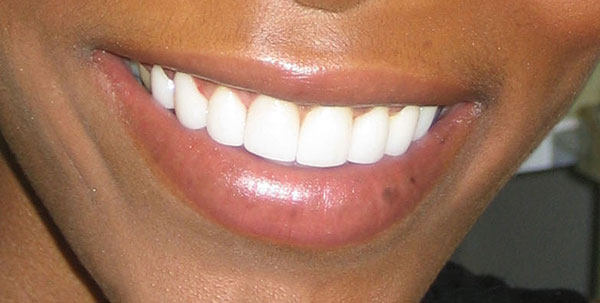
The most obvious benefit is appearance. Porcelain reflects light much the way natural enamel does, so well-made cosmetic veneers have depth and translucency rather than a flat, painted-on look. We can control shade, shape, length and texture down to fine detail, which means we can make a smile look brighter and more even while still keeping it believable.
They’re also remarkably stable in colour. Unlike natural teeth or bonding, porcelain doesn’t absorb stains from coffee, red wine or curry. The shade you choose is, for practical purposes, the shade you keep.
Veneers are strong and long-lasting. Bonded properly to healthy tooth structure, they handle normal biting and chewing well and routinely last well over a decade with good care.
There’s an emotional benefit too, and we’d be doing you a disservice to skip it. The patients who tell us their veneers “changed everything” usually aren’t talking about porcelain. They’re talking about laughing in photos again, feeling sharp in a job interview, or finally not noticing their teeth at all. That confidence is the real product.
What Porcelain Veneers Are Made Of
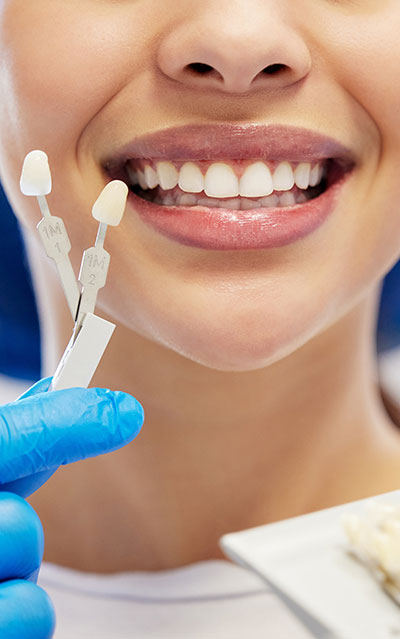
The material matters more than most people realise, and porcelain is the gold standard for one reason that’s really about the result: it behaves like natural enamel. Light passes into it and reflects back with the same depth and translucency real teeth have, which is exactly why proportionate porcelain veneers in Toronto look like teeth rather than the flat, opaque alternatives you sometimes see.
What truly brings it to life is craftsmanship. Because we shape and finish your veneers in our own in-house lab, we can fine-tune their colour, character and texture against your actual face rather than relying on a remote technician’s best guess. That’s the difference between veneers that pass for your own teeth and veneers that announce themselves.
How the Veneer Process Works
One of the reasons people put off veneers is that they imagine something more dramatic and uncertain than it is. Here’s how it actually goes for most of our patients:
1. Consultation and smile design
We start by understanding what’s bothering you and what you’d love your smile to do. We examine your teeth, gums and bite, take photos, and talk through whether veneers are the right tool — or whether something simpler would get you there.
2. Preparation
For traditional porcelain veneers, we gently shape a thin layer from the front of the teeth being treated to make room for the porcelain. This is conservative, we remove only what’s needed, and it’s done with your comfort in mind. We then take precise digital impressions.
3. Crafting your veneers in our lab
This is where our in-house lab changes the game. Rather than mailing your case across the country and waiting weeks, our technicians build your veneers under the same roof as your dentist, matching the porcelain to your face and fine-tuning shade, character and texture in real time. It also means something most practices can’t offer: because we fabricate your veneers in-house, you avoid the long stretch in uncomfortable acrylic temporaries that traditional, outsourced cases require. Learn how our in-house lab eliminates temporaries.
4. The fitting
When your veneers are ready, we try them in, check the fit, colour and feel, and make sure you love how they look before anything is permanent. Once you’re happy, we bond them securely in place.
5. Final refinement and follow-up
We polish, check your bite, and bring you back to confirm everything feels right as you settle in. Most veneer cases are completed in a small number of visits over a few weeks, not months.
Are You a Good Candidate for Veneers?
Veneers are a wonderful option for a lot of people, but they’re not the automatic answer for everyone, and we’d rather tell you that honestly up front.
You’re likely a strong candidate if you have generally healthy teeth and gums, your concerns are mainly cosmetic — colour, shape, chips, minor gaps or mild crowding — and you have enough healthy enamel to bond to. Patients who want a natural-looking improvement and are committed to caring for their smile tend to be delighted with the result.
You may not be the right fit, at least not yet, in a few situations. Active gum disease or untreated decay needs to be handled first, because veneers belong on a healthy foundation. Significant crowding or bite problems are often better corrected with orthodontics before, or instead of veneers; in those cases we may suggest Invisalign first. And if you clench or grind heavily, we’ll talk about protecting your investment with a nightguard, since unmanaged grinding can damage any restoration.
The honest truth is that the only way to know for certain is an in-person assessment. Sometimes the best cosmetic result comes from veneers; sometimes it comes from whitening, bonding or straightening, alone or in combination. Our job is to point you to the option that genuinely serves you.

Common Concerns, Honestly Answered
We hear the same worries often, and they deserve straight answers rather than reassurance for its own sake:
Will they look fake?
This is the number one fear, and it’s fair. We’ve all seen the blindingly white, identical-looking smiles that read as artificial across a room. The fix is design, not luck. By controlling shade, translucency, length and subtle irregularity, and checking the porcelain against your own face in our lab, we build smiles that look like teeth. Natural is harder than perfect, and it’s the whole point.
Does getting veneers hurt?
The process is more comfortable than most people expect. Preparation is done with local anaesthetic, and most patients describe the experience as easy rather than painful. Some mild sensitivity afterward is normal and settles quickly.
Is it permanent?
Because a thin layer of enamel is usually shaped during preparation, traditional veneers are a long-term, irreversible commitment. The teeth will always need to be covered by a restoration afterward. That’s exactly why we plan so carefully, and why a preview matters before you proceed.
What if I don't like them?
You’ll see and approve your design before anything is permanent. The try-in stage exists precisely so we can adjust before bonding, not after.
Caring for Your Veneers
One of the best things about porcelain veneers is how little they ask of you. There’s no special routine. You brush and floss exactly as you would with natural teeth, and you keep up with your regular checkups and cleanings so we can keep an eye on the veneers along with the gums and teeth around them.
A few simple habits help them last. Porcelain veneers in Toronto are designed to be strong, but are not indestructible, so it’s wise not to use your teeth as tools. It’s best not to open packages, bite your nails, or chew ice and pens. If you grind or clench in your sleep, a custom nightguard is a small investment that protects a much bigger one. And while the veneers themselves won’t stain, the natural teeth and gums around them still benefit from easing up on coffee, red wine and tobacco.
Looked after this way, quality porcelain veneers routinely last well over a decade, and often considerably longer. And if one ever chips or needs attention down the road, our in-house lab makes a repair or replacement far easier to match and handle.
Frequently Asked Questions
How much do porcelain veneers cost in Toronto?
If you’re searching for porcelain veneers near me, cost is often one of the first questions. Veneer pricing depends on how many teeth you’re treating, the complexity of your case and the materials involved, so the most accurate answer comes from a consultation. We walk through the full investment transparently before you decide on anything.
Are porcelain veneers worth it?
For most of our patients the answer is an easy yes — though rarely for the reason they expected. It’s less about the porcelain and more about no longer hiding their smile in photos, meetings and first impressions. Veneers are durable, stain-resistant and long-lasting, and that everyday confidence tends to repay the investment many times over. We’ll always help you weigh honestly whether they’re right for your goals and budget.
How long do porcelain veneers last?
With good care, porcelain veneers commonly last well over ten years, and many last considerably longer. Their lifespan depends heavily on your daily habits, whether you grind your teeth, and keeping up with regular checkups.
Do veneers ruin or damage your natural teeth?
A thin layer of enamel is usually shaped during preparation, which is why veneers are a long-term commitment. Done conservatively on healthy teeth, they protect and strengthen the visible tooth rather than harming it, but the teeth will always need to remain covered afterward.
How many teeth will I need to do?
It varies. Some patients only need a single veneer to repair one tooth; others choose six, eight or ten across the smile zone for an even, balanced result. We design to your face and your goals, not a set formula.
Will my veneers stain over time?
Porcelain resists staining far better than natural enamel or bonding, so your veneers won’t darken from coffee, wine or food the way teeth do. Good oral hygiene keeps the surrounding gums and natural teeth looking their best too.
Should I whiten my teeth before getting veneers?
Often, yes. If you’re keeping some natural teeth alongside your veneers, we may whiten them first so we can match your veneers to a brighter baseline shade. Learn about professional teeth whitening.
What's the difference between veneers and bonding?
Bonding uses tooth-coloured resin applied directly in a single visit — it’s more affordable and conservative but stains and chips more easily over time. Veneers are custom porcelain, more durable and stain-resistant, with a more refined result.
Should I straighten my teeth instead of getting veneers?
If your main issue is alignment, orthodontics like Invisalign may be the better long-term solution, sometimes followed by minimal cosmetic work. If your concerns are colour, shape and small imperfections, veneers may be the more direct route.
Do veneers feel different in my mouth?
There’s a short adjustment period as you get used to the new shape, but most patients stop noticing their veneers within days. They’re designed to feel like natural teeth when you eat and speak.
What happens if a veneer chips or comes off?
It’s uncommon, but if it happens we can repair or replace the affected veneer. This is another advantage of our in-house lab — replacements can be matched and handled efficiently.
Are veneers covered by insurance or the CDCP?
Veneers are generally considered cosmetic, so they’re usually not covered by dental insurance or the Canadian Dental Care Plan. We’re happy to explain your coverage and options during your visit.
Seen on Style by Jury
As the show's exclusive cosmetic dentists, Dr. Charkiw and Dr. Afsar designed and crafted smiles for participants across more than 100 episodes — real transformations, filmed and broadcast, that show what thoughtful cosmetic dentistry can do.

Transform your
smile today
and direct billing to insurance